Toronto 2026/Mayor/Darrell Brown
Running for
Mayor
City-wide
Every ward votes
Days until polls open
29

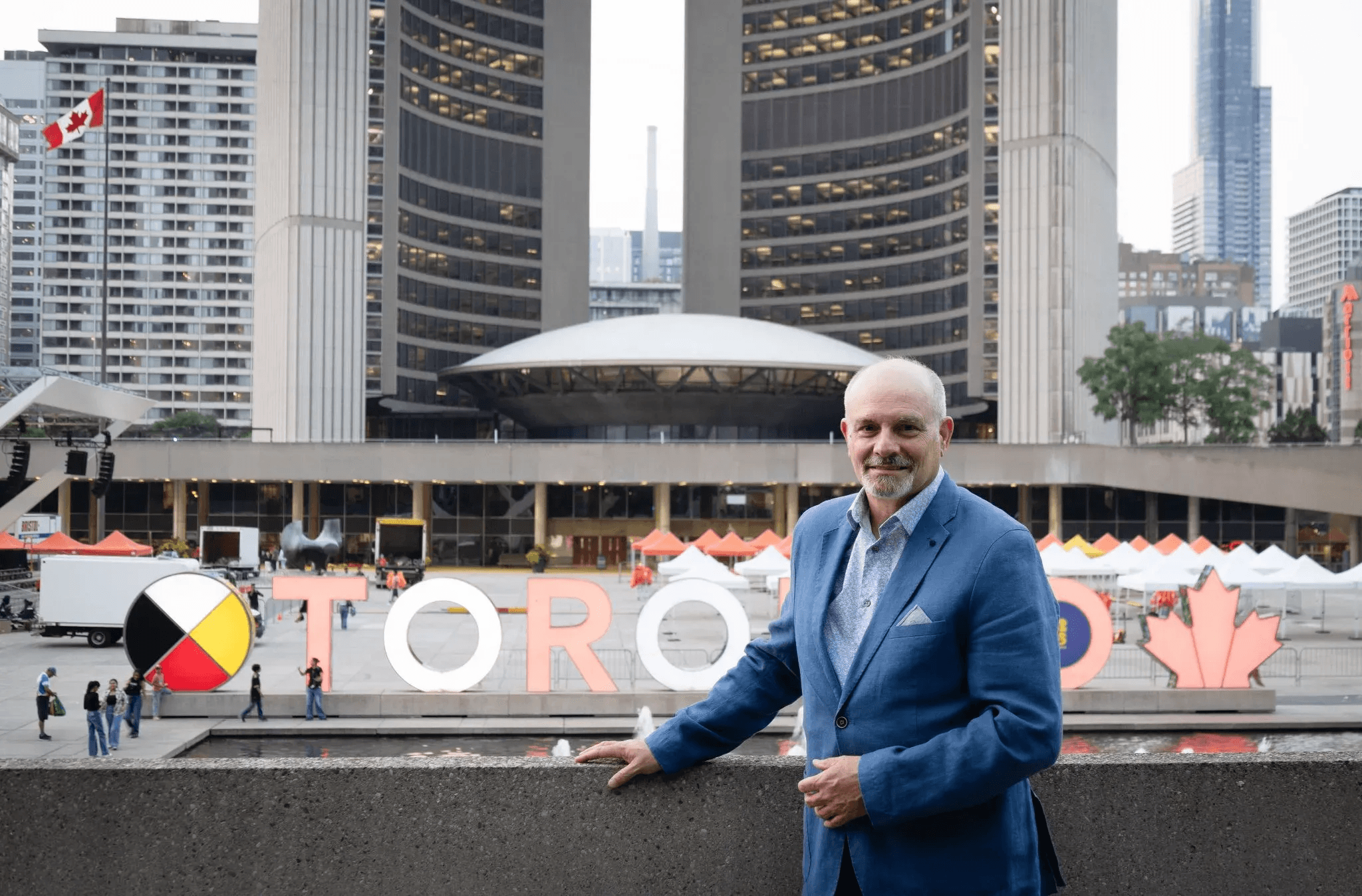
About Darrell

Written by Darrell Brown in answer to our questionnaire, and published as given. Not our description of them.

Darrell Brown has over three decades of consulting and legal experience, serving major multinational corporations, charities, not-for-profits, national and international unions, governments and their regulatory authorities, and institutions such as USAID and the Asian Development Bank. He has consulted in fifteen countries with oversight responsibilities for projects on five continents, and was awarded a medal and commendation from the Ukrainian government for his work on social sector reforms there.

Darrell has advised on a wide range of topics, including government relations, judicial reform, pensions, provident funds, insurance, mutual funds, commercial law, bankruptcy procedure, securities law, non-bank financial services, institutional governance, and tax policy. His executive, managerial, and project management experience spans strategy development, financial assessment, operational planning, human resources, public relations, and technical implementation and performance measurement.

Beyond his international and domestic consulting, Darrell has worked in the arts sector and owned an art gallery in Toronto. Some of his most rewarding work has come from helping people in need, directly and through charities he has advised, work that has saved lives and reunited families. Darrell is the proud father of five children — three boys and two girls — whose heritage reflects a cultural mosaic of Guyanese, Ukrainian, and Canadian ancestry. Among his most recent successes, he raised $15 million to help the CNE survive COVID and avoid insolvency; it now holds the largest surplus in its history.
Our questionnaire

Where Darrell Brown stands

Darrell Brown’s own answers to the questions we put to every candidate, published as given — including, where they wrote one, their reasoning in their own words.

Five decisions facing the next council

Should Toronto permit substantially more housing as-of-right in every ward, including areas currently dominated by detached and semi-detached homes?

  • Darrell Brown
    Darrell Brown
    No

    Blanket as-of-right ignores real differences in transit access across wards. I support targeted, well-sited housing — including supportive and 'missing middle' housing — under adopted Secondary Plans, not one-size-fits-all rules overriding local context.

When a person living in a park has been offered an available indoor space that meets their accessibility, safety and household needs, should the city require them to leave the encampment?

  • Darrell Brown
    Darrell Brown
    Yes

    Only if the offer is permanent housing with supports. Housing-first: once genuinely suitable, permanent housing is offered, remaining in an encampment isn't housing, it's warehousing. Offers must be real and permanent, not just shelter beds - pair any move with continued supports.

Should Toronto introduce road-pricing measures, such as congestion charges or tolls, if the revenue is dedicated to transportation improvements?

  • Darrell Brown
    Darrell Brown
    Yes

    Congestion pricing has worked to reduce traffic by up to 30% (London). New York and Singapore are examples of success. How it is structured is key.

Should Toronto raise additional local revenue to address its infrastructure repair backlog rather than defer maintenance while seeking funding from other governments?

  • Darrell Brown
    Darrell Brown
    Yes

    I have a comprehensive proposal on alternative revenue sources. Property tax revenue cannot service the needs of Torontonians. See my presentation at electdarrellbrown.ca

Should Toronto publish project-level budgets, schedules and performance updates for all major capital projects?

  • Darrell Brown
    Darrell Brown
    Yes

    There is a serious transparency issue in Toronto and Ontario for that matter. We are years behind other jurisdictions on FOI and blanket publishing of contracts. Transparency breeds accountability.

Public safety and public space

Which approach should receive the greatest additional investment to improve public safety?

  • Darrell Brown
    Darrell Brown
    Mental-health response, addiction treatment and youth intervention

    Enforcement manages crises after they happen; crisis and prevention services stop them from happening. Mental-health response, addiction treatment and youth intervention are the same 'treatment first' logic behind my homelessness plan — investing upstream reduces the burden downstream.

Over the next council term, the Toronto Police Service budget should:

  • Darrell Brown
    Darrell Brown
    Decrease after inflation, with some responsibilities and funding transferred to civilian services

    Public safety funding should follow function, not headcount. Calls rooted in mental health, addiction and youth crisis are better and more safely handled by trained civilian responders — freeing police to focus on core policing, and delivering the crisis investment I outlined above.

How should Toronto govern automated licence-plate readers and similar surveillance technology used on public streets?

  • Darrell Brown
    Darrell Brown
    Establish citywide limits on access, retention, auditing and data sharing

    Surveillance tools need the same accountability infrastructure I've proposed for FOI and conflict-of-interest reform: clear citywide rules on access, retention, auditing and data-sharing, adopted by Council directly rather than left to weak existing privacy law.

Transit and transportation

What should receive the greatest share of the next available transit funding?

  • Darrell Brown
    Darrell Brown
    More frequent and reliable service on existing routes

    We can't wait for the next multi-decade build. Treating existing GO corridors as real rapid transit now, with frequent all-day service and fare integration, delivers benefits years before subway extensions open — and it's the lever the city can actually pull today.

When there is not enough street space for every use, which should generally receive priority?

  • Darrell Brown
    Darrell Brown
    Transit, walking and cycling

    Transit, walking and cycling move the most people per metre of street. It is the logic behind the BRT corridors (dedicated lanes, signal priority) I've proposed. Neighbourhood parking needs are addressed separately, through building-level requirements, not general curb allocation.

Housing and growth

If Toronto could make one major housing intervention this term, which should receive the greatest emphasis?

  • Darrell Brown
    Darrell Brown
    Build or finance substantially more affordable and supportive housing

    Zoning permissions and faster approvals won't produce deeply affordable or supportive housing on their own. The market doesn't build it. Solving homelessness means the city directly building and financing it. Public delivery is the lever within Council's control that gets people housed.

What should be Toronto's primary role in delivering affordable and supportive housing?

  • Darrell Brown
    Darrell Brown
    Build, acquire and own significantly more housing

    Direct public ownership guarantees permanence for supportive housing: critical to solving homelessness. But scale requires all three levers: partnering with non-profits, financing private supply, and building directly wherever the market and non-profit sector alone can't deliver.

Where should Toronto permit the greatest increase in housing density?

  • Darrell Brown
    Darrell Brown
    Concentrate growth on major streets and near rapid transit

    Density should follow transit capacity, not blanket citywide rules. Corridors and rapid-transit nodes can absorb growth appropriately; low-rise interior neighbourhoods with poor transit access, like much of Scarborough, cannot without straining roads, parking and services.

City government and service delivery

Which change would you implement to reduce the cost of building housing in Toronto?

  • Darrell Brown
    Darrell Brown
    Reduce development charges, parkland payments and related levies

    Blanket as-of-right zoning and stripped standards override local planning control and neighbourhood context. The lever that actually lowers cost without those trade-offs is fiscal: reduce development charges and parkland levies, especially for affordable and supportive housing.

What is the most important change Toronto should make to reduce capital-project delays and cost overruns?

  • Darrell Brown
    Darrell Brown
    Strengthen professional project management, procurement and contracting

    I've managed complex projects across five continents and helped turn around the CNE's finances. Toronto's overruns are a delivery-discipline problem. Rigorous project management, procurement and contracting stop cost blowouts before political scope changes make them worse.

Which service-delivery model should Toronto use more often?

  • Darrell Brown
    Darrell Brown
    Use competitive contracts and outside providers where they can deliver better value

    Competitive procurement and outside delivery, tested against real service standards, is the same discipline behind the professional project management I called for above. Where the city does use arm's-length agencies, they need the same conflict-of-interest safeguards I've proposed elsewhere.

Taxes, spending and fiscal sustainability

Over the next council term, residential property-tax revenues should generally:

  • Darrell Brown
    Darrell Brown
    Grow approximately with inflation and population

    Property tax should track cost and growth, not become the default lever for new priorities. The investments I've proposed: supportive housing, crisis services, transit should be funded through provincial/federal cost-sharing and dedicated tools like congestion pricing, not property tax hikes.

Which type of additional revenue should Toronto rely on most heavily?

  • Darrell Brown
    Darrell Brown
    Congestion charges, tolls, parking levies and service fees

    Congestion charges and road-use fees put the cost on those who create it, fund transit and street investment directly, and avoid the trade-offs of higher property tax or development charges. However, municipal income tax is a progressive tax and is more affordable.

What should Toronto do first to address its infrastructure repair backlog?

  • Darrell Brown
    Darrell Brown
    Introduce a levy or other recurring source reserved for maintenance

    SOGR and expansion competing for the same pool is exactly the structural funding gap I've flagged before. The fix is a dedicated, protected maintenance revenue stream, not an annual scramble that leaves repair losing to ribbon-cuttings.

Governance and representation

What should be Toronto's primary approach to the provincial government?

  • Darrell Brown
    Darrell Brown
    Publicly press for greater authority, revenue and a different fiscal arrangement

    The province's TTC operating contribution sits near 9%, much of it one-off. That structural imbalance won't fix itself. Toronto needs to publicly press for a standing funding formula and real fiscal tools, not quietly align with provincial priorities hoping for scraps.

Strong mayor powers should be used mainly for:

  • Darrell Brown
    Darrell Brown
    appointing and removing senior staff, restructuring departments

    Strong mayor powers shouldn't override Council's collective judgment on housing or budget. That's the concentrated authority my transparency work warns against. The legitimate use is internal management: staffing decisions and departmental restructuring.

Your ward and your record

Which objective should receive the greatest attention in your ward during the next council term?

  • Darrell Brown
    Darrell Brown
    Transit, roads, parks, waste collection and local infrastructure

    Scarborough absorbs a growing share of the city's development without matching investment in transit, roads, parks and local infrastructure. Ward 25's next term should close that gap before adding further growth pressure the current infrastructure can't support.

Which single result should voters use to assess your performance at the end of the term?

  • Darrell Brown
    Darrell Brown
    Improved fiscal sustainability and service performance

    This is a loaded question. There should be multiple measures - housing, fiscal sustainability and specific measurable results at the ward level. A mayor has to lead on multiple fronts.

    If you selected “Ward commitment,” state one numerical target and a deadlineSecured funding and a firm timeline for all-day frequent GO service on the Stouffville and Lakeshore East lines serving Ward 25 — the concrete transit win Scarborough residents can verify, not a vague promise.

Priorities and trade-offs

Over the next council term, Toronto should:

  • Darrell Brown
    Darrell Brown
    Finish approved projects but undertake few additional road reallocations

    Finishing what's approved honours commitments already made and keeps momentum on safer , consistent with prioritizing transit, walking and cycling on constrained corridors. But further citywide reallocations should be evaluated case-by-case, not accelerated uniformly.

When demonstrations substantially block transportation or access to essential institutions, the city should prioritize:

  • Darrell Brown
    Darrell Brown
    Protect protest subject to clear rules for locations, access routes and duration

    The same principle I've applied to surveillance and data governance applies here: neither blanket restriction nor unlimited disruption, but clear, published rules on locations, access routes and duration that protect the right to protest while keeping essential services running.

Where should Toronto direct its next major technology investment?

  • Darrell Brown
    Darrell Brown
    Public data and systems that measure outcomes and hold departments accountable

    Public data and performance-measurement systems are the technology backbone of the FOI/COI reforms I've proposed — proactive disclosure, municipal scorecards and departmental accountability all depend on the city actually being able to measure and publish what departments do.

When Toronto faces a structural operating-budget gap, what should it do first?

  • Darrell Brown
    Darrell Brown
    Reduce internal administration, staffing or contract costs

    Before asking residents for more or cutting services, prove the administrative and procurement discipline I've called for elsewhere is actually being applied. Professional project management and competitive contracting should close gaps before taxes or services are touched.

What is the most important municipal intervention for improving Toronto's business climate?

  • Darrell Brown
    Darrell Brown
    Expand housing, transportation, public safety and infrastructure

    Businesses locate where workers can get there, feel safe, and find space to grow, not where taxes are marginally lower. Scarborough's employment lands are already at risk from housing pressure; the real economic-development lever is transit, safety and infrastructure investment.

How should Toronto attract major employers, investment and events?

  • Darrell Brown
    Darrell Brown
    Housing affordability, transportation, safety and quality of life

    Same principle as the last answer: employers follow the same fundamentals residents need — affordable housing so workers can live near jobs, reliable transportation, safety, and a functioning public realm. Chasing individual companies with bespoke deals is a weaker, less durable strategy.

What should Toronto prioritize to increase construction capacity?

  • Darrell Brown
    Darrell Brown
    Maintain a stable, long-term pipeline of public projects

    Boom-bust public capital spending is exactly the instability I've flagged elsewhere. It discourages contractors and workers from investing in local capacity. A stable, multi-year pipeline of public housing and infrastructure projects is what lets that capacity actually get built.

What should receive the greatest priority in Toronto's public-realm budget?

  • Darrell Brown
    Darrell Brown
    Cleanliness, roads, sidewalks, snow clearing, washrooms and routine park care

    This is the same principle as my infrastructure-backlog answer: protect the basics first. Clean, well-maintained roads, sidewalks, parks and washrooms are what residents actually rely on daily before the city commits to fewer, flashier signature projects.

What should be Toronto's primary tool for supporting arts, culture and nightlife?

  • Darrell Brown
    Darrell Brown
    Grants, city facilities and affordable cultural space

    There is a demonstrable cost/benefit produced from cultural activities. A dollar in produces multiple dollars out if structured correctly. Arts and culture keep a city vibrant.

If autonomous taxi services operate in Toronto, which condition should the city prioritize?

  • Darrell Brown
    Darrell Brown
    Accessibility, geographic coverage and minimum service standards

    Again, these are not mutually exclusive categories. Data disclosure and service obligations are essential. That said, we have to look at labour impact when speaking about anything autonomous.

Each card is one question, with Darrell Brown filed under the answer they gave and their own words underneath it. The other options offered are not shown, nor how the rest of the field answered.

How the whole city answered

Registered candidates from the City Clerk’s official list, refreshed daily. Campaign sites are linked as published by the candidate; a link is not an endorsement.

Everyone running for mayorWhere the whole field stands